
The area was originally settled by Bushmen (San) and Hottentots, but towards the end of the 17th century they were gradually displaced by the Hlubi people wandering down from KwaZulu-Natal, led by a woman named Xhosa. These people claimed a common ancestry with all the tribes of the eastern coast, originating from a place called eMbo. When the Xhosa encountered the Hottentots, they were much taken with the clicks in the Hottentot language, which became a fashionable part of the Hlubi language.
Successive waves of people came down the coast and began to split up into homogenous groups. The northern group became the Pondo, the middle group became the Mtembu and the southern group became the Gcaleka.
Pressure from migrating tribes in the north pushed the population southwards where they began to encounter the white traders and settlers moving north. The inevitable result was conflict.
The first half of the 19th century were particularly turbulent years. The reign of Shaka was sending shock- waves down the coast as refugees from his wars came pouring south in search of new homes. This led to many differences of opinion between the residents and the newcomers. The British, moving north, often intervened in these tribal wars and also found themselves in wars of their own. The result was the nine Frontier Wars. It was at this time that a young girl called Nongqawuse had a vision that her forebears would help the Xhosa drive the English out. The disastrous result weakened the Xhosa still further. Matters were not helped by the fact that the Xhosa themselves were not an homogenous people ?? there were a number of old and newly-formed tribes in a shifting demographic landscape and often they fought amongst themselves.
The Ninth Frontier War spelled the end of the Xhosa and the Transkei area was incorporated into the Cape Colony. But it was never quiet. There were raids between settlers and Xhosas, and turf wars between different Xhosa tribes. Missions were established here and there to try to bring Christianity to the people, with limited success.
Because of the warlike reputation of the region and the ongoing tensions between the different factions, the place was never really populated by European settlers and was thus left largely to the indigenous people.
Version II:
History of Pondoland (Transkei)
The land of the Pondos is full of stories that remind us of times gone by. Most of these tales are kept only through their telling but some have been recorded.
Somewhere between 500 and 1200 years ago Bantu speaking people settled all along the East coast of Southern Africa down to what is now known as Port Elizabeth. This area was also home to nomadic San and Khoi people. Many of the Khoi were incorporated bringing with them the three characteristic clicks that are found in the Xhosa language today.
This region is geographically referred to as "Eastern Pondoland".
The amaPondo are one of 12 Xhosa speaking tribes. The Pondos and other Xhosa speakers along the coast had their first contact with Europeans in the form of shipwrecked sailors. Strange light-skinned apparitions would occasionally be left with the white foam on the beaches after a big storm. The Xhosa word for "Whities" is "Abelungu" - meaning just that - 'foam from the sea'. Some of the shipwrecked stayed - the clan name 'Umlungu' often recording the history of their children.
Trade between the amaPondo and other Xhosa speakers - where Xhosa tobacco and cannabis was traded for metal - has been dated to 400 years ago. Trade between the Xhosa and Boers was recorded 300 years back.
Around the late 1700's the pressure for land began increasing. For the Xhosa speaking tribes there were the British to the South, Boers to the East and other Bantu speakers from the North. Those from the North were pushed down by the series of battles and migrations that were set off by the rise of Shaka and the Zulu state. The war with the British and the Boers continued sporadically for 60 years. By the early 1850's relations between the Cape Colony and the so called 'Territories' had settled down to an uneasy peace. This standoff was tragically settled by the 'cattle killing' of 1856. On the advice of a diviner (Nongqawuse), people were ordered to eat all their cattle and consume or destroy all their crops. All those who disobeyed together with all whites were to be swept into the sea by a strong wind on the 18th of February 1857.
At this time there was an abundance of cattle and grain, but with the resulting famine, resistance to the colonials crumbled. In the same year the British introduced a poll tax. By 1858 all chiefdoms except those of the Mpondo had submitted to colonial administration.
Geographically remote, tucked away in the far NE of the 'Territories' the Pondos were furthest away from the wars with the colonists. They did not take part in the cattle killings of 1856 and were exempt from the poll tax of '57.
The Pondos had been effected by the Mfecane - the wars and migrations set off by the rise of Shaka and his Zulu empire. In 1828, during the reign of Faku (paramount chief of the Pondos), they lost their land and cattle east of the Mzimvubu (river) to many hundreds of people who were fleeing Shaka's impis (warriors). It is during this retreat that Faku reorganised his military forces and intensified raiding, hunting, agricultural and trade enterprises. By 1843 the Pondos had replaced their herds of cattle and Faku represented many people living south of the Zulu kingdom, commanding tremendous power. The following year Faku signed a treaty with the Cape Colonial government which recognised and protected his authority. Many groups of people joined his empire as a means of protecting their land from the 'trekkers' in Natal who were keen to expand their own borders.
Through various political, economic and religious pressures the tribespeople were forced to accept the annexing of Pondoland to the colony in 1894.
For 70 years Pondoland fell under the Cape Provincial Administration - first under British colonial government and then from 1948 under the Nationalist party government. The 'separate development' policies (Apartheid) of H.F. Verwoerd resulted in the 'awarding' of 'self-government' to an area known as the Transkei in 1963 (The area known as the Transkei incorporated many, though not all, of the Xhosa speaking tribes.) This was followed by 'full independance' in 1976.
After the first fair democratic elections in South Africa in 1994, the Transkei as an entity fell away, and the region became part of the vast and diverse Eastern Cape. Despite this incorporation, Transkei in general and Pondoland in particular remain discrete regions in many ways.
Many people still lead lives not much different from those of their ancestors during the 16th and 17th centuries. Traditional forms of land use and government are still practised, and while this may be partially explained by the shortage of facilities and capital during colonial and apartheid governments, the resilience of many craft, religious and other cultural practices also suggests a determination on the part of many rural people to retain elements of their heritage. This does not mean that modern ideas and innovations are rejected; instead they are incorporated and employed alongside traditional methods."
Janet Hayward (Research in progress)
Version III:
The Pondoland region was occupied by hunter gatherers from about 500,000-150,000 years ago, with agropastoralists establishing themselves in the area in the 7th century AD. People have thus had an impact on the local environment for many centuries (Feely 1987).
By the nineteenth century, the area was used extensively for cattle grazing. Settlements at that time were mostly temporary and only from 1894, after the annexation of Pondoland and subsequent large scale immigration into the area did grazing occur year round (Beinart 1982).
The area was then subject to regulations and restrictions from different governing bodies: the British colonial authorities (1894-1910), the Union of South Africa (1910- 1963), the Republic of South Africa (1963-1976), the government of the Transkei homeland (1976-1994) (Southall 1982) and more recently the provincial Eastern Cape and national government structures.
From the turn of the century to about 1930, cattle numbers increased significantly and since have varied much less with declines due to drought or government destocking regulations in the 1960s (Kepe and Scoones 1999).
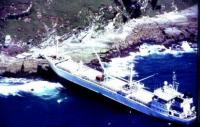
... Read more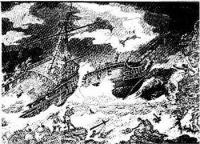 The Wild Coast partly derived its name from its wilderness character, but mostly from the pounding breakers and cauldron of its boiling seas when stormy conditions reign. This particular part of the Eastern Cape coast has been the graveyard of many a ship through the ages, and ship’s skeleton, artefacts and structures bear mute testimony to the loss of lives and vessels.
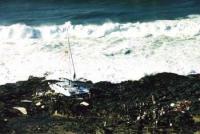 Some have left their names – it is believed that the name Port St Johns comes from the wreck of the sixteenth- century Portuguese ship Sao Joao. Mazeppa Bay’s name comes from one of the apparently few ships that made it – the British ship Mazeppa often used the bay for anchorage and survived to tell the tale. But the most famous wreck of all is that of the English ship, Grosvenor.
 The expedition found no trace of the Grosvenor. In the meantime, however, another legend had arisen: that the ship had been carrying a fortune in bullion and silver. One of the rumours insisted that the fabulous Peacock Throne of Persia (a royal chair made of solid gold with peacocks outlined in precious stones, and which had been looted round about this time) had been smuggled on board.